Why Your Visor Is Still Getting Wet
Zakia AshrafYou've bought an anti-rain spray. You've applied it. And your visor is still streaming with water every time it rains.
This is one of the most common frustrations riders and cyclists across the UK report, and in almost every case, the product isn't the problem. The application is.
Anti-rain treatments, including superhydrophobic sprays like VisioDry, are genuinely effective when applied correctly. But they're also sensitive to exactly how and where you use them. Get one step wrong and the results range from underwhelming to non-existent.
Here's what's actually going wrong, and how to fix each one.
1. You applied it to a dirty surface
This is the most common cause of anti-rain spray failure, by a significant margin.
Your visor looks clean. But even after a gentle wipe with a cloth, it almost certainly still has a layer of invisible grease, body oils, exhaust residue and road film across the surface. These residues create a barrier between the lens and the treatment, the anti-rain formula can't bond to the visor material itself, only to whatever is sitting on top of it. The result is a coating that's technically there but has almost nothing to grip onto, so it wears off quickly and beads poorly.
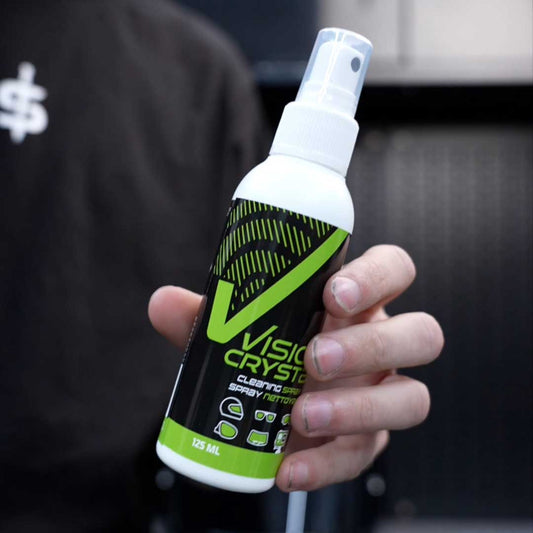
The fix is simple: before applying any anti-rain treatment, clean the surface properly with a dedicated optical surface cleaner, VisioCrystal is designed specifically for this. Spray, wipe with a microfibre cloth, let it dry completely, then apply your anti-rain spray. The difference in how long the treatment lasts and how well water beads is immediately noticeable.
If you've been applying anti-rain spray directly to your visor without this step, try it once with a proper clean first and compare the results.
2. You wiped it after spraying
Almost everyone does this at least once, because it feels like the right thing to do. Spray something on, buff it in, that's how most protective products work.
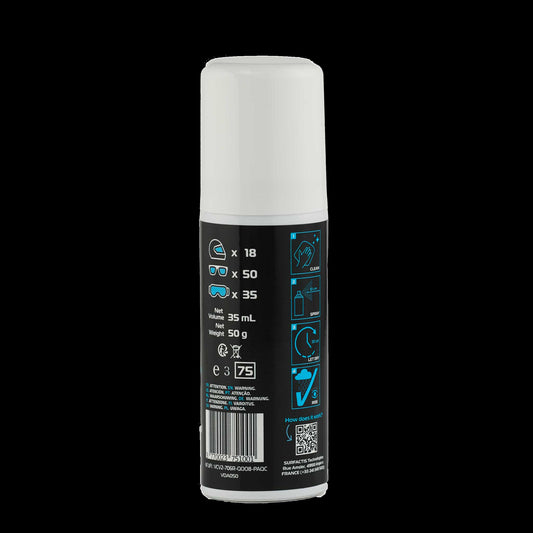
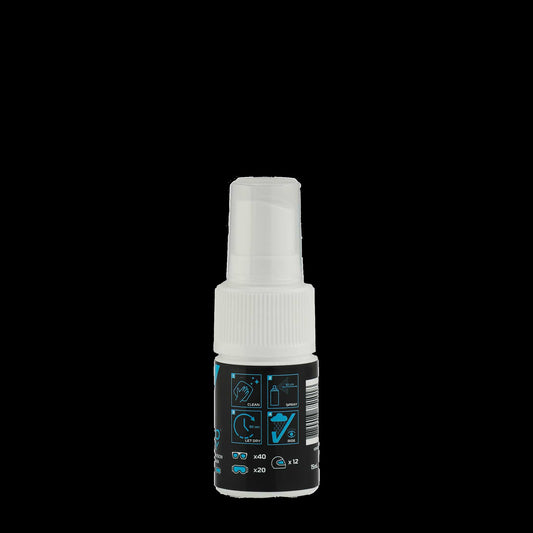
VisioDry works differently. After spraying, the formula needs 30 seconds to bond to the surface undisturbed. Wiping during this window removes the product before it has set, leaving either nothing on the visor or a patchy, uneven coating that performs poorly.
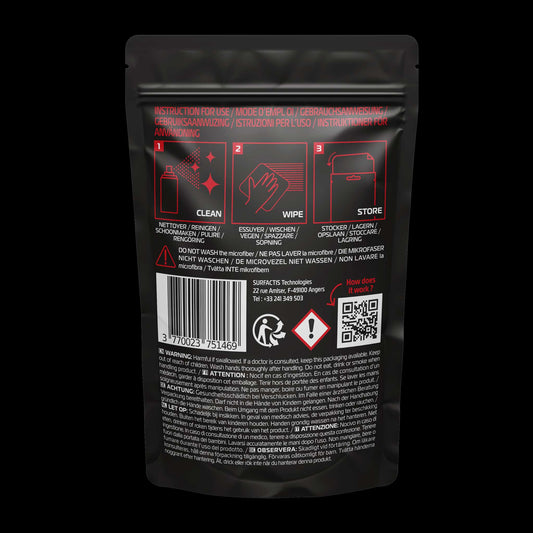
The instruction is simple but easy to miss: spray, wait 30 seconds, do not wipe. No buffing, no cloth, no wiping it off. Just wait. If you're in the habit of wiping products after application, this is the single most important thing to change.
3. You applied it in the wrong conditions
Anti-rain sprays bond best to clean, dry surfaces at room temperature. Applying to a damp visor, a visor that's been sitting in the sun, or one that's still warm from a previous ride reduces how well the formula sets.
If you're applying VisioDry in a garage in winter, make sure the visor isn't cold to the touch, cold surfaces slow the bonding process. If you're applying outdoors in direct sunlight, the surface may be too warm for the formula to settle properly.
The ideal conditions are indoors or in a sheltered space, at ambient temperature, with a fully dry and clean surface. It takes an extra two minutes to do it properly, and the coating will last significantly longer as a result.
4. You're only treating the outside
If your visor is clear of water on the outside but your vision is still poor, fogging is likely the issue, not rain. Fogging happens on the inside of your visor, caused by warm breath meeting the cooler inner surface and condensing.
Anti-rain spray cannot fix fogging. It goes on the outside of the lens and only addresses water coming from outside. No matter how much anti-rain spray you apply, it has no effect on what happens on the interior surface.
For fogging, you need an anti-fog treatment on the inside, VisioFog anti-fog microfibre wipe treats the inner surface and prevents condensation from forming for hours. Many UK riders experience both problems simultaneously: rain on the outside and fog on the inside. Using VisioDry and VisioFog together addresses both, they're designed to work as a pair.
5. You're expecting it to work like a windscreen wiper
On a windscreen, wipers physically remove water continuously. On a visor treated with a superhydrophobic spray, the mechanism is different, water beads up and, at speed, rolls away. At slow speeds or when stationary, beading is still visible but water may not clear as dramatically as it does at 40mph or above.
Standard hydrophobic treatments do rely heavily on speed and airflow to clear water. VisioDry's superhydrophobic formula is designed to work without airflow, water rolls away under its own surface tension, but the physics still means beading is more pronounced at speed. At a standstill in heavy rain, some water will sit on the surface momentarily before rolling away.
The expectation to set is this: your visor will bead water clearly, you will be able to see through it in rain, and you won't need to wipe or squint. You won't have a perfectly dry visor in a downpour, but you will have a clear view.
The quick checklist before your next application
If you want to get the best possible result from VisioDry, run through these before applying:
- Clean the surface first: use VisioCrystal to remove all grease, oils and road film. Allow to dry fully.
- Make sure the surface is dry and at room temperature: not cold, not warm from the sun.
- Spray from 10cm: apply an even coat across the whole surface.
- Do not wipe: wait 30 seconds without touching the surface.
- Address fogging separately: if you fog up on the inside, add VisioFog to your routine.
Follow these steps and the results will be a significant improvement on what you've seen before. If you've been frustrated with anti-rain spray in the past, the fix is almost always one of the points above, not the product.