Why Your Visor Fogs More in Spring Than Winter
Zakia AshrafSpring arrives, the roads dry out, and you finally get back on the bike, only to find your visor fogs up worse than it did in the depths of January. You're not imagining it. This is one of the most common complaints from UK riders at this time of year, and there's a straightforward scientific reason behind it.
Understanding why it happens makes it much easier to fix. Here's what's actually going on inside your helmet.
The science: it's all about temperature difference
Fogging happens when warm, moist air meets a cold surface. The moisture in that air condenses into tiny water droplets on the cooler surface, your visor, and that's the white-out blur you're riding through.
In winter, your body temperature drops too. You're colder, you're breathing less warmth, and you're often moving fast enough that airflow keeps the visor surface temperature more stable. The temperature difference between your breath and your visor is smaller than you'd expect.
In spring, everything changes. Your body warms up quickly. Your breath carries significantly more moisture and heat, especially when you're exerting yourself, even just sitting upright at speed. But the air outside is still cold. A typical April morning in the UK sits anywhere between 4°C and 10°C. Your breath is around 37°C. That's a gap of up to 30 degrees, and it's hitting the inside of a thin polycarbonate surface with very little airflow on the inside to carry it away.
The result: more fog, more often, and more suddenly than you ever experienced in December.
Why mornings are the worst
Spring temperature swings are dramatic in the UK. It's not unusual to start a ride at 7°C and arrive at your destination two hours later in 18°C sunshine. Your visor hasn't adapted to any of it.
On a cold morning start, the visor is at ambient temperature, near freezing. You get on the bike, your helmet warms up from your body heat, your breathing intensifies with any effort, and within minutes you're riding in a fog cloud of your own making.
This is compounded by the fact that most riders don't prep their visor at the start of the season. It's been in a bag or on a shelf since October. Any previous anti-fog treatment has long since worn off. The surface is bare and completely unprotected.
The ventilation trap
A common instinct is to crack the visor open slightly. It works, but only until you hit a roundabout, filter through traffic, or stop at lights. The moment airflow drops, fog returns instantly.
Relying on ventilation alone to manage fogging is reactive. You're constantly managing the problem rather than preventing it. On UK spring roads where you can go from 60mph A-road to a 20mph town centre in minutes, this becomes genuinely distracting, and distractions on a bike are dangerous.
The inside surface is the problem, not the outside
This is worth stating clearly because it causes a lot of confusion. Anti-rain sprays like VisioDry work on the outside of your visor. They repel water, road spray and rain from the exterior surface. They are excellent at that job.
But fogging happens on the inside. No amount of hydrophobic coating on the outside surface addresses condensation forming on the inner face of your visor. These are two completely separate problems that need two separate solutions.
For the inside surface, you need an anti-fog treatment, specifically one that prevents condensation from forming in the first place, rather than just wiping it away after the fact.
How VisioFog Anti-Fog Wipes fix the problem properly
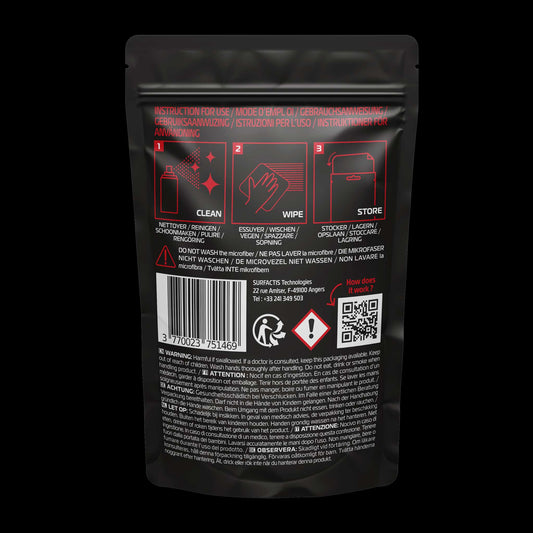
VisioFog Anti-Fog Microfibre Wipes work by leaving an invisible anti-static film on the inside surface of your visor. This film disrupts the surface tension that allows water droplets to form and cluster, instead, any moisture spreads into an invisible, transparent layer that doesn't obscure your vision.
The treatment lasts for multiple rides, not just a single outing. Apply it to a clean inner surface before your first spring ride, and you're covered for days of commuting or weekend riding without touching the visor again.
Application takes about fifteen seconds. Wipe the inside of your visor with the cloth, let it dry, and you're done. No sprays, no drips, nothing to interfere with your helmet's optics.
Clean first, always
One thing that undermines any anti-fog treatment is applying it to a surface that isn't properly clean. Fingerprints, grease from storage, or residue from old treatments all create barriers that stop the film from bonding evenly to the visor surface.
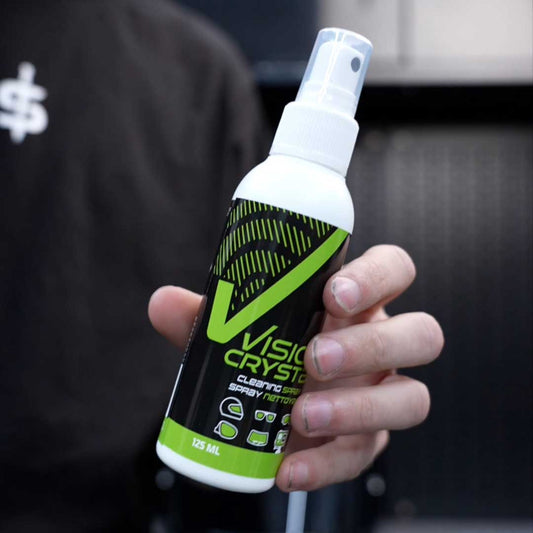
Before applying VisioFog, give the inside of your visor a clean with VisioCrystal Surface Cleaner. It removes road film, grease and fingerprints without scratching polycarbonate or interfering with coatings. A clean surface means the anti-fog treatment bonds properly and lasts significantly longer.
This two-step process, clean with VisioCrystal, protect with VisioFog, takes under a minute and handles spring fogging completely.
Don't forget the outside while you're at it
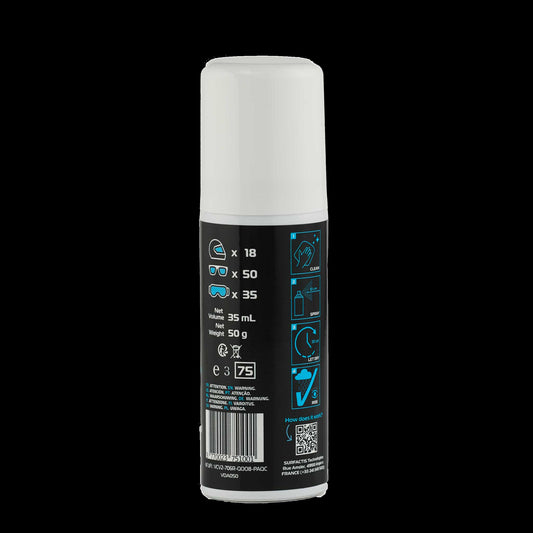
Spring roads also mean insects, pollen, and the first proper road grime of the year coating your visor exterior. While you're sorting the inside, it's a good time to treat the outside surface with VisioDry Anti-Rain Spray too.
Spring showers are unpredictable, the weather in the UK can turn within an hour, and having the outside of your visor treated means rain beads away instantly without needing to lift your head into the airflow.
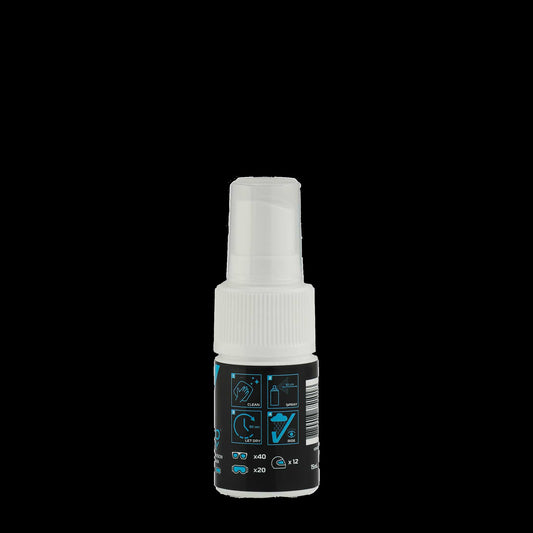
If you want everything sorted in one go, the VisioDry Essentials Kit includes VisioCrystal, VisioDry, and VisioFog together. It covers cleaning, rain repellency, and anti-fog in under two minutes.
A quick spring visor prep routine
- Remove the visor from your helmet if possible
- Clean the outside surface with VisioCrystal and a microfibre cloth: remove insects, road film, and grime
- Clean the inside surface with VisioCrystal: remove fingerprints and any old treatment residue
- Apply VisioFog to the clean, dry inside surface and allow to dry
- Apply VisioDry to the clean, dry outside surface: spray from 10cm, wait 30 seconds, do not wipe
- Refit the visor
The whole process takes less than five minutes and your visor is fully prepared for whatever the UK spring throws at it.
Spring fogging isn't a mystery and it isn't bad luck. It's a predictable consequence of warm breath meeting cold surfaces at exactly the point in the year when you most want to be riding. The fix is straightforward, treat the inside surface before it becomes a problem, not after you've nearly missed a junction because you couldn't see.
If your visor has been sitting untreated since last autumn, now is the right time to sort it.