Summer Cycling in the UK: Dealing With Humidity and Sweat Fog
Zakia AshrafAsk most cyclists when their glasses fog up the most and they'll say winter, cold mornings, damp air, sharp temperature drops. But summer brings its own fogging problem, and for many riders it's actually worse. Humid air, heavy effort on long climbs, sweat building up around the frame, all of it creates the conditions for lenses to fog at exactly the moment you need to see clearly.
The good news is that summer fog is entirely preventable. This guide explains why it happens, what makes it worse on UK summer rides specifically, and what you can do to stop it, before you set off, not after your lenses have already clouded over.
Why Glasses Fog Up in Summer
Fogging happens when warm, moist air meets a cooler surface and the water vapour in that air condenses into tiny droplets. Those droplets scatter light and create the hazy, milky film you see on your lenses.
In winter, the cause is obvious, cold ambient temperatures cool the lens surface dramatically, and any warm air near your face condenses quickly. In summer, the mechanism is slightly different but the result is the same.
On a warm, humid summer ride:
- Your body is working hard and generating significant heat, particularly on climbs. The air immediately around your face is warm and saturated with moisture from sweat and breath.
- UK summers are frequently humid, especially in the mornings and after rain. Humidity levels of 70–80% are common on British summer days, meaning the air is already carrying a lot of moisture before your body adds any more.
- When you slow down or stop, airflow across your lenses drops to zero. The warm, moist air trapped between your face and the lens has nowhere to go, and it condenses rapidly, exactly at the moment you're pausing to check a route, wait at a junction or recover at the top of a climb.
Summer fog tends to form on the inside surface of the lens, the side facing your face, rather than the outside. That distinction matters because it determines exactly what you need to treat to fix it.
Why UK Summers Are Particularly Problematic
Cyclists in hotter, drier climates often have less trouble with summer fogging because lower humidity means the air carries less moisture to begin with. The UK is different.
British summers are characterised by warm temperatures combined with high relative humidity, the kind of muggy, close conditions that make even moderate efforts feel sweaty. Add the typical British mix of sunny spells followed by brief showers, and you have conditions where humidity can swing significantly within a single ride.
Morning rides are particularly prone to fogging. Overnight dew and cooler air temperatures mean humidity is at its highest in the early hours, just as many cyclists head out. An effort on a climb generates body heat quickly, and the combination of warm exertion in cool, humid air is a reliable recipe for fogged lenses.
Post-shower rides are similarly problematic. Rain raises ambient humidity sharply and cools surfaces, including your lenses, making condensation more likely as soon as you start working hard again.
The Sweat Factor
Humidity from the atmosphere is one thing. Sweat is another, and on a hard summer ride, sweat is often the dominant cause of fogging.
Sweat from your forehead and scalp runs down toward your face. Some of it drips directly onto lenses. Some of it evaporates and adds to the humid microclimate between your face and your glasses. Either way, the moisture ends up on or around the lens surface and contributes to fogging.
A few things make the sweat problem worse:
- Frame fit: glasses that sit very close to the face trap warm, moist air more effectively and give it less room to escape. The tighter the seal, the worse the fogging.
- Poor ventilation: glasses without vented lenses or frames don't allow airflow through to dry the lens surface. Blocked or covered vents have the same effect.
- Dirty lenses: oils, fingerprints and sweat residue on the lens surface give moisture more to cling to. A contaminated lens fogs faster and more severely than a clean one.
- Hard efforts at low speeds: a sprint or steep climb generates maximum sweat but minimal airflow. The worst of both worlds for fogging.
What Doesn't Work (and Why)
Before getting to the solutions that do work, it's worth quickly covering a few common fixes that don't.
Wiping lenses with your jersey: this removes the fog temporarily but spreads oils and sweat residue across the lens surface, making future fogging worse. It also risks scratching lenses, particularly with textured or gripper fabrics.
Adjusting glasses constantly: nudging glasses down your nose creates an air gap and can help short-term, but it's a distraction while riding and doesn't address the underlying cause.
Leaving it to airflow: this works at speed on flat ground but fails the moment you slow down, climb, or stop. It's not a solution for UK riding where variable terrain and junctions are unavoidable.
Dish soap on the inside of lenses: an old trick that creates a very thin coating to prevent fogging. It works briefly but wears off almost immediately with any moisture or handling, and can leave residue that actually worsens clarity.
What Actually Works: The Complete Approach
Fixing summer cycling fog properly requires addressing it from two angles, treating the lens surface before you ride, and managing airflow and sweat during it.
1. Apply an Anti-Fog Treatment to the Inside of Your Lenses
This is the most effective single thing you can do. An anti-fog wipe or treatment applied to the inside surface of your lenses creates an invisible barrier that prevents water vapour from condensing into droplets. Instead of forming a hazy film, moisture spreads evenly and invisibly across the treated surface, a process called hydrophilic spreading, leaving your vision completely clear.
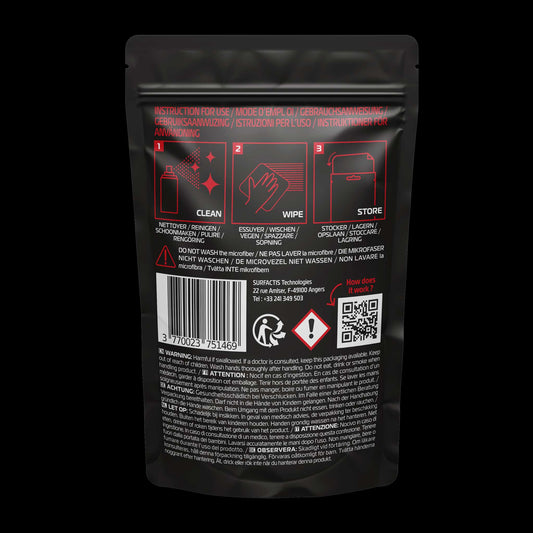
VisioFog Anti-Fog Microfibre Wipes are designed exactly for this. The wipe is impregnated with an anti-fog solution that transfers to the lens surface with a single application. It takes a few seconds, lasts up to 8–10 hours per application, and is reusable up to 200 times on glasses. Apply it before you set off and it works throughout the ride, including during those stationary moments at the top of a climb when standard airflow-dependent solutions fail completely.
The key is applying it to the inside of the lens, the surface facing your face. That's where condensation from breath and sweat forms. Treating the outside won't solve summer fogging.
2. Clean Your Lenses Properly Before Every Ride
A clean lens fogs significantly less than a dirty one. Sweat residue, sunscreen, finger oils and road grime all increase the surface's tendency to trap moisture. Cleaning with a dedicated optical surface cleaner before applying any anti-fog treatment also ensures the treatment bonds fully to the lens and lasts longer.
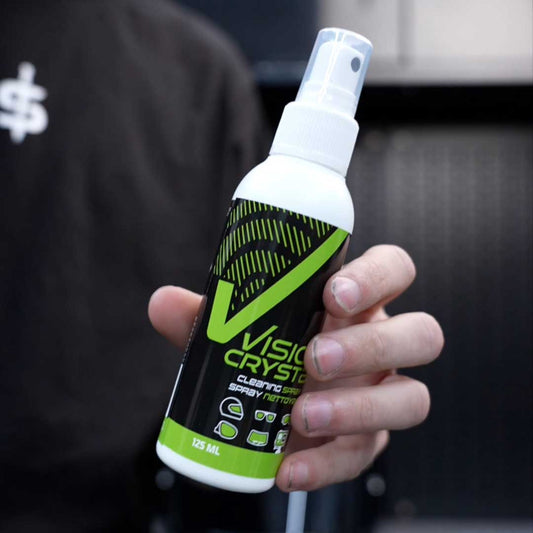
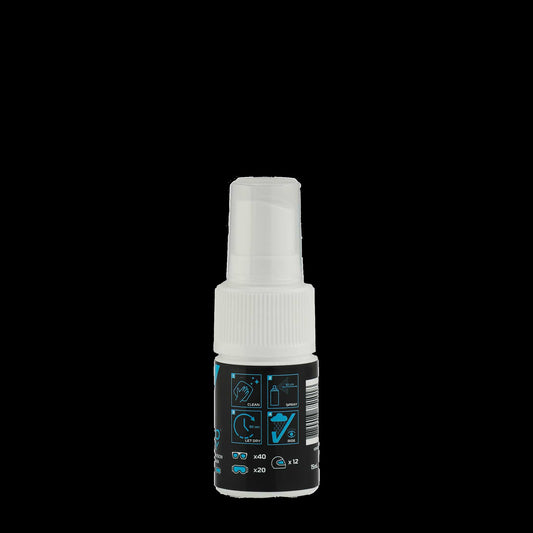
Use VisioCrystal Surface Cleaner and a soft microfibre cloth to remove all residue before applying VisioFog. This takes under a minute and makes a noticeable difference to both how quickly fogging forms and how well the anti-fog treatment performs.
3. Manage Sweat at the Source
Anti-fog treatment handles condensation from humidity and breath. For sweat running directly onto lenses, a secondary approach helps:
- A cycling cap or sweat band under your helmet absorbs sweat from your forehead before it can run down toward your glasses. Halo-style sweat bands are designed specifically to redirect sweat away from your face rather than channelling it downward.
- Reposition your glasses slightly lower on your nose on climbs where you know sweating will be heavy. Even a small gap allows more airflow across the back of the lens and reduces moisture build-up.
- Choose glasses with vented frames or lenses if you're buying new cycling eyewear. Ventilation channels in the frame allow airflow across the lens surface even at lower speeds, significantly reducing fogging on climbs and slow efforts.
4. Allow for Air Circulation When Stationary
When you stop, at junctions, to check your phone, at a café, take your glasses off briefly if fogging has started. A few seconds of open-air exposure lets the lens surface cool slightly and allows moisture to evaporate. This is a quick reset before applying more anti-fog treatment if needed.
If you're stopped for longer, at the top of a climb, waiting for a group, opening helmet vents and loosening any buff or neck cover helps reduce the ambient temperature around your face and slows the rate at which moisture builds up.
Summer Fog vs Winter Fog: The Key Difference
It's worth being explicit about one distinction, because it changes what you need to treat.
Winter fogging typically happens on the outside of the lens, cold ambient air chills the lens surface, and warm air from your breath or body hits it and condenses on the outer face.
Summer fogging happens on the inside, warm, humid air from your exertion and sweat meets the slightly cooler inner surface of the lens and condenses there.
This is why anti-fog treatment needs to go on the inside surface for summer riding. And it's why anti-rain treatment, which goes on the outside of the lens and is designed to repel water droplets, doesn't solve summer fogging. The two products address different surfaces and different problems.
If you ride through summer rain as well as in humid conditions, applying VisioDry Anti-Rain Spray to the outside and VisioFog Anti-Fog Wipe to the inside gives you complete coverage, rain repelled from the outer surface, fog prevented on the inner surface, whatever the conditions.
A Simple Pre-Ride Routine for Summer Cycling
Building a quick pre-ride routine means you're never caught out by fogged lenses mid-ride. It takes under two minutes:
- Clean both surfaces of your lenses with VisioCrystal and a soft microfibre cloth, removes sweat residue, oils and road film from the previous ride
- Apply VisioFog Anti-Fog Wipe to the inside of each lens, press firmly and wipe across the full inner surface, then reseal the wipe in its pouch
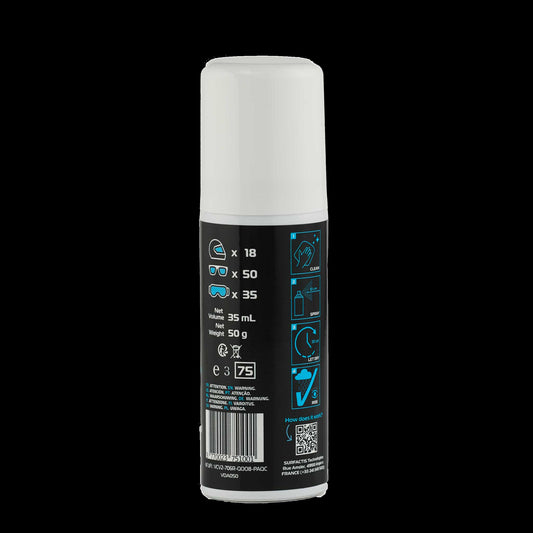
- Apply VisioDry Anti-Rain Spray to the outside if rain is forecast, spray from 10cm, wait 30 seconds, do not wipe
- Put on a sweat band or cycling cap if you're heading out for a hard effort or a long ride in warm conditions
That's it. Clean lenses, fog prevention on the inside, rain protection on the outside, sweat managed at the source. Lenses stay clear from the start of the ride to the end, including on climbs, at junctions and through any summer showers.
Summer fog on cycling glasses is caused by warm, moist air from sweat and exertion condensing on the cooler inner surface of the lens. UK humidity makes this worse, and it's most pronounced during hard efforts, on climbs and when you stop.
The fix:
- Apply an anti-fog wipe to the inside of your lenses before every ride
- Clean lenses thoroughly first so the treatment bonds properly and lasts longer
- Use a sweat band to stop sweat running directly onto your lenses
- Choose vented glasses for better airflow on slow efforts and climbs
- If rain is also possible, treat the outside of your lenses with anti-rain spray too
The combination of VisioFog on the inside and VisioDry on the outside covers everything UK summer cycling can throw at your lenses, fog, sweat, humidity and rain in one simple pre-ride routine.
VisioFog Anti-Fog Microfibre Wipes are available from visiodry.co.uk, reusable up to 200 times and effective for 8–10 hours per application. Pair with VisioCrystal Surface Cleaner as your pre-ride lens prep, and VisioDry Anti-Rain Spray for the outer surface on wetter days. All three are available together in the VisioDry Essentials Kit.