How to Prep Your Ski Goggles Before a Trip
Zakia AshrafThere's a particular frustration that hits on the first morning of a ski trip when you drop into a run, your goggles fog immediately, and you realise you should have dealt with it before you left. Fogging, scratched lenses, degraded anti-fog coatings, dirty foam, these are all things you can identify and fix at home, in the warm, with time to spare. Doing it on the mountain, in ski boots, with cold fingers, is a different matter entirely.
This guide covers exactly what to do before your trip: how to inspect, clean and treat your ski goggles so they perform properly from the first run to the last, and how to pack them so they arrive in the same condition they left.
Why Pre-Trip Prep Matters More Than You Think
Most skiers give their goggles a quick wipe before packing them and consider the job done. But a wipe doesn't remove the oils, sweat residue and road film that build up on lenses after a season of use, and it doesn't address the condition of the anti-fog coating on the inner lens, which is what determines whether your goggles fog or stay clear.
Ski goggles are used in some of the most demanding optical conditions of any sport. The combination of cold ambient air, intense physical exertion, changing temperatures between the slopes and the lift, and the enclosed environment inside a helmet means your goggles are constantly working to manage condensation. If the lens coating is degraded or the surface is dirty, that system breaks down, and the result is fog at the exact moment when clear vision matters most.
A proper pre-trip prep routine takes under fifteen minutes and makes a significant difference to how your goggles perform across the whole trip.
Step 1: Inspect the Lenses for Damage and Wear
Before cleaning anything, check the condition of both lenses, the outer and the inner.
Outer Lens
Look for deep scratches, cracks or chips. Fine surface scratches are normal on older goggles and don't significantly affect vision. Deep scratches that catch light or create glare are more of a problem, particularly in bright alpine conditions. Hold the lens up to a light source and look across the surface at an angle, this reveals scratches that aren't obvious head-on.
If the outer lens has significant damage, check whether your goggles take replacement lenses. Most modern goggle systems are designed for easy lens swaps, and replacing a scratched outer lens before a trip is far simpler and cheaper than dealing with compromised vision for a week.
Inner Lens and Anti-Fog Coating
The inner lens is more delicate. It carries the factory-applied anti-fog coating, a hydrophilic treatment that spreads moisture evenly across the surface rather than allowing it to condense into droplets. This coating can be damaged by wiping, touching or cleaning with the wrong materials.
Check the inner surface by looking for any areas of haze, uneven patchy coating or visible scratches. If the coating is visibly degraded, particularly if your goggles fogged badly in their last season, the factory coating may no longer be performing properly. This is where applying a fresh anti-fog treatment before the trip becomes important.
One critical rule: never wipe the inside of your goggle lenses with anything dry. If the inner lens is wet or has moisture on it, blot gently with a soft microfibre cloth, do not rub. Rubbing a wet anti-fog coating is one of the most common ways skiers damage it.
Step 2: Clean the Outer Lens Properly
The outer lens can be cleaned, carefully. It picks up dirt, grime, fingerprints and residue over a season of storage, and a contaminated outer surface affects both clarity and the performance of any water-repellent treatment you apply.
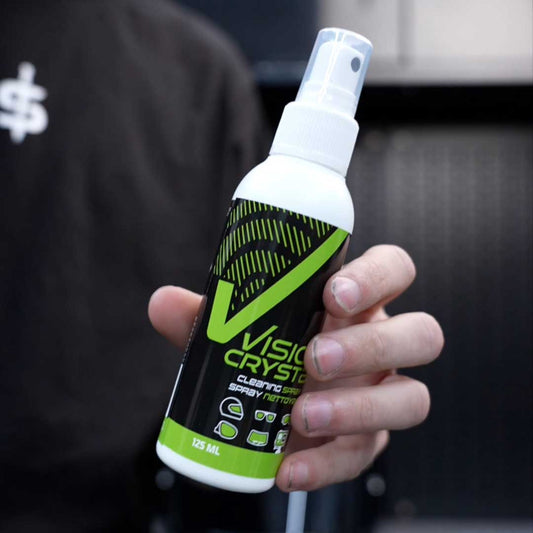
Use VisioCrystal Surface Cleaner and a clean, soft microfibre cloth. Spray a small amount of VisioCrystal onto the cloth, not directly onto the lens, and wipe gently across the outer surface in circular motions. This lifts and removes oils, fingerprints and any residue without leaving streaks or damaging coatings.
Do not use:
- Paper towels or tissues: these scratch polycarbonate lens surfaces
- Household glass cleaners: many contain ammonia or alcohol that damage lens coatings
- Your jacket sleeve or any rough fabric: even a small amount of abrasion degrades the surface over time
- Any product not specifically designed for optical surfaces
Allow the outer lens to dry completely before moving to the next step.
Step 3: Apply Anti-Fog Treatment to the Inner Lens
This is the most important step for preventing fogging on the mountain, and the one most skiers skip entirely.
Even if your goggles have a factory anti-fog coating, it degrades with use. Repeated exposure to moisture, the occasional unavoidable wipe, and general wear all reduce its effectiveness over time. Applying a fresh anti-fog treatment before your trip restores or supplements that protection and ensures your goggles start the trip performing at their best.
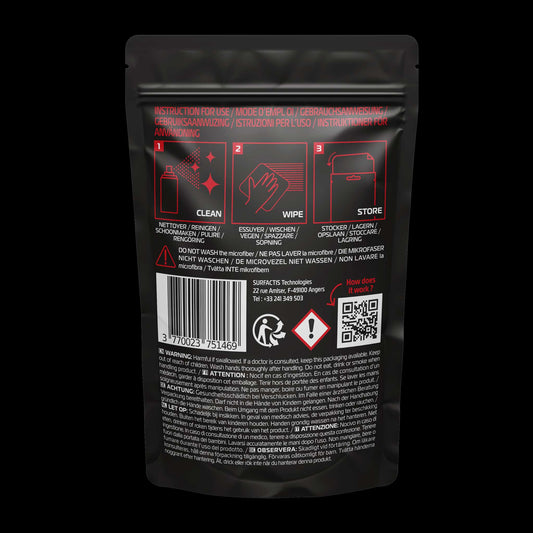
VisioFog Anti-Fog Microfibre Wipes are ideal for this. The wipe is impregnated with an anti-fog solution that transfers directly to the lens surface on contact. Apply it to the inside of the goggle lens by pressing the wipe firmly against the surface and wiping across it. The treatment is effective for up to 8–10 hours per application and the wipe is reusable up to 180 times on goggles, so one wipe lasts a full season of trips and more.
Apply to a clean, completely dry inner surface. If you've had any moisture inside the goggles, allow them to dry fully at room temperature first before treating.
A few things to be aware of with the inner lens anti-fog treatment:
- Apply before the trip, not the morning you're heading to the slopes, doing it the evening before gives the treatment time to fully bond
- Reseal the VisioFog wipe in its zip pouch immediately after use so it doesn't dry out
- Bring the wipe with you on the trip so you can reapply each morning as part of your daily routine
Step 4: Apply Anti-Rain Treatment to the Outer Lens
This step is less commonly discussed but makes a real difference, particularly on spring ski trips or in resorts where mixed snow and rain conditions are common.
Rain and wet snow hitting the outer lens can significantly reduce visibility. A superhydrophobic anti-rain treatment applied to the outer surface causes water to bead up and roll away instantly rather than spreading across the lens as a visibility-reducing film. On a chair lift in wet conditions, or in heavy spring sleet, the difference is immediately noticeable.
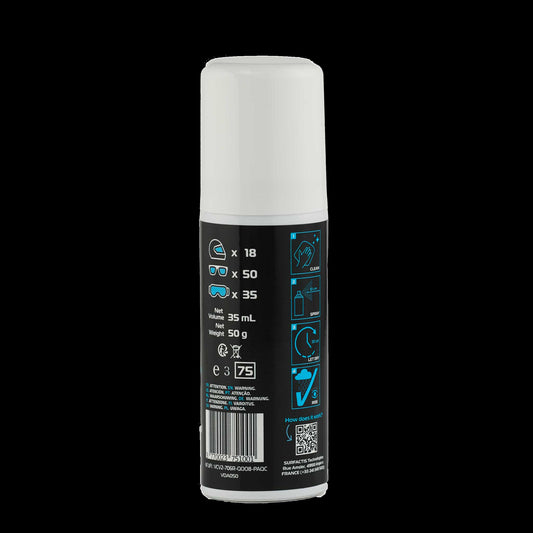
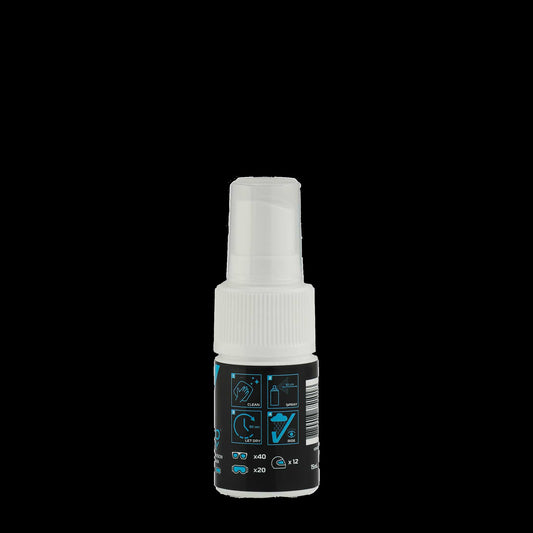
Apply VisioDry Anti-Rain Spray to the clean, dry outer surface. Spray evenly from approximately 10cm away, wait 30 seconds, and do not wipe. The treatment is invisible once dry and does not affect the tint or optical clarity of the lens.
This treatment goes on the outside only. The outside of a ski goggle lens is exposed to the elements; the inside faces your face. Treating each surface with the right product, anti-rain on the outside, anti-fog on the inside, gives you complete protection in all conditions.
Step 5: Check and Clean the Foam and Frame
Lenses get all the attention, but the foam seal and frame deserve a check too.
The foam around the frame creates the seal between your goggles and your face. Compressed, worn or saturated foam reduces that seal and allows cold air and moisture into the goggle, both of which contribute directly to fogging. Press the foam gently around the entire frame and check for areas that have flattened significantly, become stiff or feel damp.
If the foam is damp from the previous season, allow the goggles to air dry completely at room temperature before storing or travelling, usually a day or two is enough. Never use a hairdryer or radiator to speed this up; excessive heat can warp the thermoplastic frame and damage the foam adhesive.
The strap is worth checking too. Look for fraying, elasticity loss and any damage to the buckle or adjustment mechanism. A failed strap on the mountain is a simple but disruptive problem, catching it at home costs nothing.
Step 6: Check Lens Ventilation
Ski goggles rely on airflow through the frame vents to manage the temperature and humidity difference between your face and the outer surface of the lens. Blocked vents are a direct cause of fogging, particularly during high-effort skiing and on chair lifts.
Check that all vents on your goggles are clear and unobstructed. Some goggles have adjustable vents, check these open and close freely. Foam debris, dried moisture or compressed foam can partially block vents without being immediately obvious.
Also check that your goggles are compatible with your helmet, specifically, that the helmet brim doesn't cover or restrict the top vents of the goggle. Helmet-goggle compatibility varies by brand and model, and blocked top vents are a frequently overlooked cause of persistent fogging.
Step 7: Pack Them Properly
All of the prep work above can be undone by poor packing. Goggles are surprisingly easy to damage in transit.
- Always use the goggle bag or case: the soft bag that comes with most goggles is not just for storage. The inner lining is usually a microfibre material designed not to scratch the lens. Pack goggles lens-face into the bag, not lens-face down against hard surfaces.
- Don't pack goggles under heavy items: pressure on the frame can warp it and break the seal with the lens. Keep them in a top pocket or a dedicated goggle case in your luggage.
- Keep them away from aerosols and solvents: in your luggage, away from sunscreen, deodorant and any other sprays that could accidentally contaminate the lens surface.
- Don't store them on your helmet in transit: resting goggles on the helmet brim during travel or transfers exposes the lens to being knocked and scratched. Keep them in the bag.
Your Complete Pre-Trip Goggle Prep Checklist
Use this the evening before you pack:
- Inspect the outer lens for deep scratches or damage, replace lens if needed
- Inspect the inner lens for degraded anti-fog coating
- Clean the outer lens with VisioCrystal and a soft microfibre cloth
- Apply VisioFog Anti-Fog Wipe to the inside of the lens
- Apply VisioDry Anti-Rain Spray to the outside of the lens
- Check and air-dry the foam seal if needed
- Check the strap for wear and the vents for blockages
- Pack in the goggle bag, away from pressure and aerosols
Doing this the evening before you travel means everything has time to dry and bond fully before you reach the mountain.
On the Mountain: Keeping Your Goggles Performing
Pre-trip prep gets your goggles to the mountain in the best possible condition. A few habits on the mountain keep them there:
- Never put goggles on your helmet forehead during breaks: this exposes the inner lens to moisture and sweat from your helmet padding, and the vents on your helmet pump warm air directly into the goggle. Take them off properly or keep them on your face.
- Remove and air-dry in gondolas and on lifts: if your goggles are fogging, taking them off and holding them away from your face for a minute allows the lens to cool and moisture to evaporate. The fog clears without you touching the lens at all.
- Don't wipe the inner lens if it fogs: blot with the goggle bag if absolutely necessary. Rubbing a wet inner lens damages the anti-fog coating.
- Reapply VisioFog each morning: takes a few seconds and ensures you start each day with full anti-fog protection.
The most common goggle problems on a ski trip, fogging, poor visibility, degraded coatings, are almost entirely preventable with a simple prep routine done before you leave home.
Clean the outer lens with a proper optical surface cleaner. Treat the inside with an anti-fog wipe. Treat the outside with anti-rain spray for mixed conditions. Check the foam, vents and strap. Pack carefully.
That's the whole routine. Fifteen minutes at home, and your goggles perform properly for the entire trip.